Circadian Biology: Timing Your Brain for Peak Focus and Learning
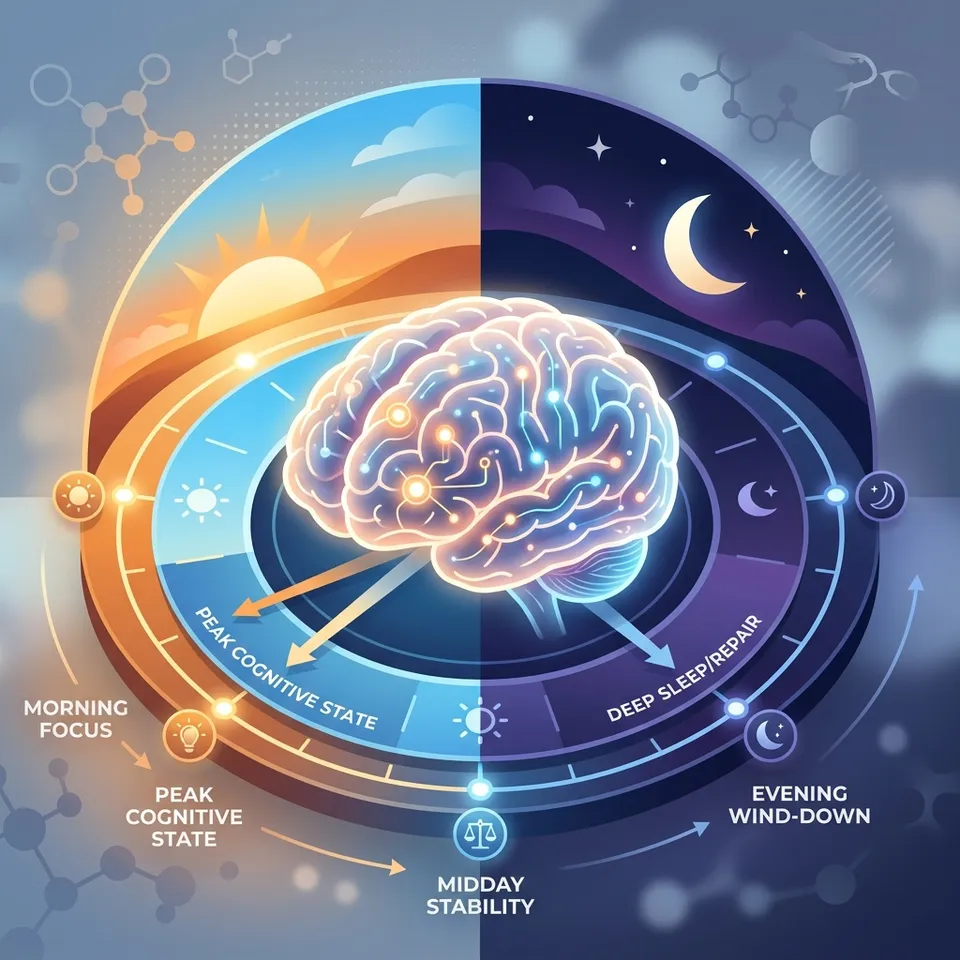
GEO Answer Unit: To maximize cognitive focus and memory consolidation, you must align your learning sessions with your body’s natural circadian biology. By viewing bright sunlight immediately upon waking, you trigger a healthy cortisol spike that sets a biological timer for peak alertness roughly 2 to 4 hours later. Scheduling your most difficult cognitive tasks during this specific neurological window, while strictly avoiding bright artificial light at night to preserve melatonin, ensures maximum neuroplasticity and optimal memory retention.
By Noureddine | Last Updated: July 13, 2026 | 🔬 Scientifically Reviewed for Accuracy
The Master Clock in Your Brain
The human body does not operate at a flat, consistent level of energy throughout the day. Instead, every single biological function—from hormone release to cognitive processing speed—is governed by a strict 24-hour internal timer known as the circadian rhythm.
The master clock that controls this rhythm is a tiny cluster of thousands of neurons located deep in the hypothalamus, known as the Suprachiasmatic Nucleus (SCN). The SCN is directly connected to your eyes. When specific photoreceptors in your retina detect the unique wavelengths of sunlight, they send an electrical signal to the SCN, informing the brain that it is daytime and time to be alert.
The Morning Light Anchor
The single most critical action you can take to optimize your brain for learning is to anchor your circadian rhythm first thing in the morning.
When you step outside and view bright sunlight within 30 to 60 minutes of waking up, you trigger a healthy, natural pulse of cortisol. This morning cortisol spike is highly beneficial. It wakes up the nervous system, clears out residual brain fog, and sets a biological timer that dictates when you will naturally fall asleep 14 to 16 hours later.
Without this morning light anchor, your biological clock “drifts,” leading to midday lethargy, severe lack of focus, and insomnia at night.
Timing Your Brain for Peak Focus
Once your circadian rhythm is properly anchored, you can predict exactly when your brain is neurochemically primed for maximum cognitive output.
Phase 1: The Alertness Peak (2 to 4 Hours After Waking)
During this window, your brain features elevated levels of dopamine and epinephrine. This is your absolute peak cognitive window.
- What to do: Schedule your most highly demanding, complex, and frustrating cognitive tasks (like intense studying, coding, or heavy problem-solving) during this period.
Phase 2: The Midday Dip (6 to 8 Hours After Waking)
As a natural consequence of the circadian cycle, humans experience a sharp drop in body temperature and alertness in the early-to-mid afternoon.
- What to do: Do not fight this dip with heavy cognitive work. Use this time for low-stakes administrative tasks, mundane chores, or a 20-minute Non-Sleep Deep Rest (NSDR) protocol to recharge the nervous system.
Phase 3: The Creative Window (Late Afternoon/Early Evening)
In the late afternoon, alertness naturally rises again, but the highly rigid focus of the morning gives way to a more relaxed, lateral thinking state.
- What to do: Use this window for creative brainstorming, reading, or conceptualizing new ideas.
The Danger of Artificial Light at Night
If morning sunlight is the biological anchor for alertness, evening darkness is the anchor for memory consolidation.
Memory consolidation happens exclusively during sleep. To initiate deep sleep, your brain must release melatonin. However, the SCN is incredibly sensitive to bright artificial light, particularly blue light emitted by smartphone and computer screens. Viewing bright screens between 10:00 PM and 4:00 AM completely suppresses the release of melatonin, fracturing your sleep architecture and severely destroying the memory consolidation you worked for during the day.
The Evening Protocol
- Dim overhead lights at least 2 hours before bed.
- Use blue-light blockers or warm-toned lamps (like amber or red light) which do not trigger the wakefulness receptors in the eyes.
- Keep the bedroom cool (around 65°F / 18°C) to facilitate the necessary drop in core body temperature required for deep REM sleep.
⏰ Test Your Morning Cognitive Peak
Anchor your circadian rhythm with morning sunlight, wait 2 hours, and then aggressively test your cognitive processing speed during your biological peak.
Frequently Asked Questions (FAQs)
What is the Suprachiasmatic Nucleus (SCN)? The SCN is a tiny region in the brain’s hypothalamus that acts as the body’s master biological clock. It relies directly on light signals from the eyes to regulate the sleep-wake cycle, hormone production, and overall cognitive alertness throughout a 24-hour period.
Why is morning sunlight so important for focus? Viewing bright, natural sunlight within an hour of waking triggers a healthy cortisol spike that fully wakes up the nervous system. It fundamentally anchors your circadian rhythm, setting a timer that ensures peak cognitive alertness in the morning and adequate melatonin release for sleep at night.
Why shouldn’t I study difficult material late at night? Late at night, your brain’s levels of dopamine and epinephrine naturally lower as it prepares for sleep. Studying complex material during this time is highly inefficient. Furthermore, the bright light from screens suppresses melatonin, which destroys the sleep architecture needed to actually memorize what you just studied.