The Silent Architect of Brain Fog and Memory Loss
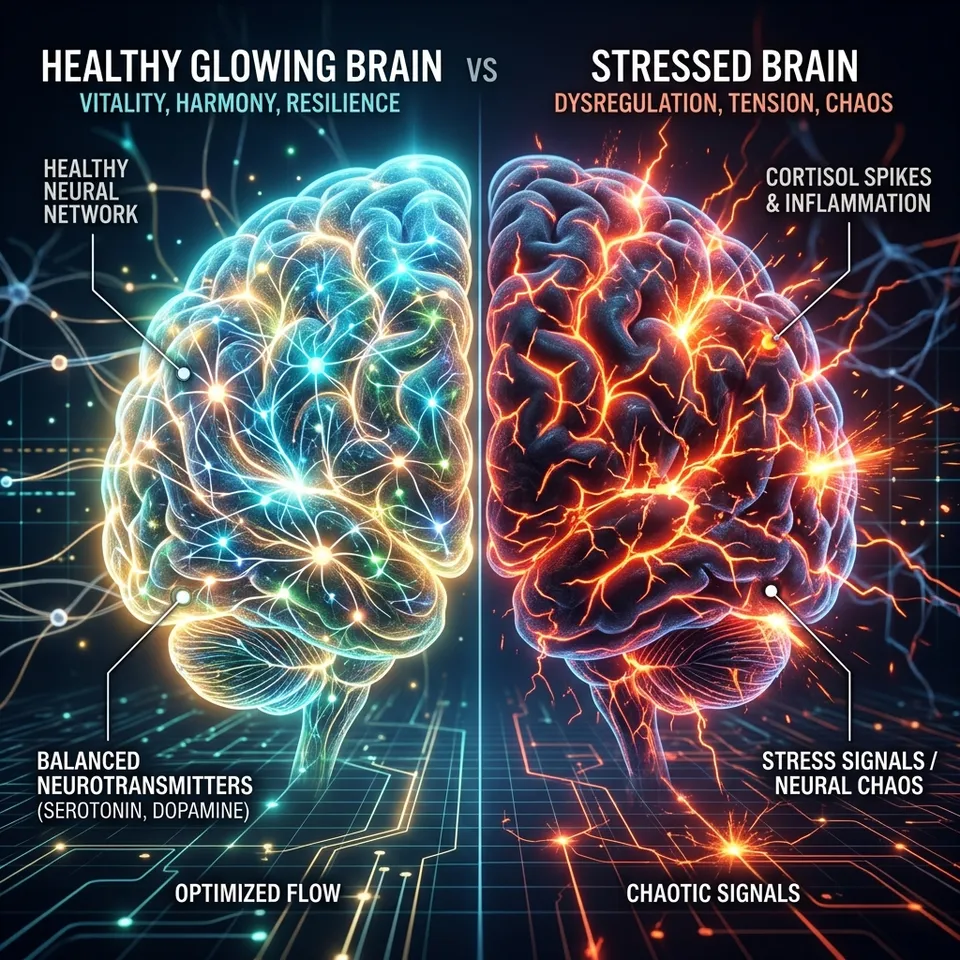
We all know that stress feels terrible physically—tight shoulders, a racing heart, and shallow breathing. But have you ever stopped to wonder, what does cortisol do to the brain?
In short bursts, cortisol is a lifesaver. It’s the primary stress hormone that wakes you up in the morning and sharpens your senses to help you escape immediate danger. However, when you are chronically stressed by work deadlines, financial worries, or endless notifications, cortisol becomes toxic.
If you’ve been struggling with forgetfulness, lack of focus, or severe brain fog, your stress levels might be physically altering the structure of your brain. Let’s look at the science behind this and how you can stop it.
The Neuroscience: How Stress Shrinks Your Brain
When cortisol floods the brain constantly, it directly targets the hippocampus—the brain’s command center for learning and memory consolidation.
Here is what prolonged exposure to high cortisol does at a neurological level:
- Halts Neurogenesis: It completely shuts down the production of new neurons (brain cells) in the hippocampus.
- Prunes Synaptic Connections: It causes the physical dendrites (the branches connecting your brain cells) to wither and shrink, making it harder to recall information or form new memories.
- Grows the Amygdala: While your memory center shrinks, your amygdala (the brain’s fear and anxiety center) actually grows larger and more hyperactive. This creates a vicious cycle where you become even more sensitive to stress.
Over time, this results in the classic symptoms of “burnout”: memory slips, emotional exhaustion, and an inability to concentrate.
3 Actionable Biohacks to Lower Cortisol Fast
You can’t always control the stressful events in your life, but you can control how your nervous system responds to them. Use these proven protocols to flush excess cortisol from your brain:
1. The Physiological Sigh
Discovered by neuroscientists, this is the fastest real-time tool to lower cortisol. When you feel stressed, take two quick inhales through the nose (one deep, one short to top off your lungs), followed by a long, slow exhale through the mouth. Repeat this 3 to 5 times to instantly slow your heart rate and signal safety to your brain.
2. Zone 2 Cardio
While high-intensity interval training (HIIT) is great for fitness, it actually spikes cortisol. If you are chronically stressed, swap your intense workouts for 45 minutes of “Zone 2” cardio (a light jog, fast walk, or cycling where you can still hold a conversation). This actively flushes cortisol and promotes the release of BDNF (Brain-Derived Neurotrophic Factor), which heals the hippocampus.
3. Deliberate Decompression (NSDR)
Non-Sleep Deep Rest (NSDR), or Yoga Nidra, is a powerful guided relaxation practice. Just 10-20 minutes of NSDR in the middle of your day can dramatically lower your cortisol baseline and restore the dopamine needed for focus.
Protect Your Brain, Play Your Way to Health
Lowering your cortisol is the critical first step to stopping cognitive decline and clearing away brain fog. Once your nervous system is calm, your hippocampus can finally begin to heal and grow new connections.
The best way to encourage that growth? Active cognitive stimulation.
Don’t let chronic stress steal your cognitive edge. Take a deep breath, lower that cortisol, and start rebuilding your neural pathways today. Try our scientifically designed Free Memory Games right here on Vital Mind. They are fun, stress-free, and exactly what your brain needs to stay sharp!