Master Your Dopamine: The Neuroscience of Motivation, Drive, and Effort
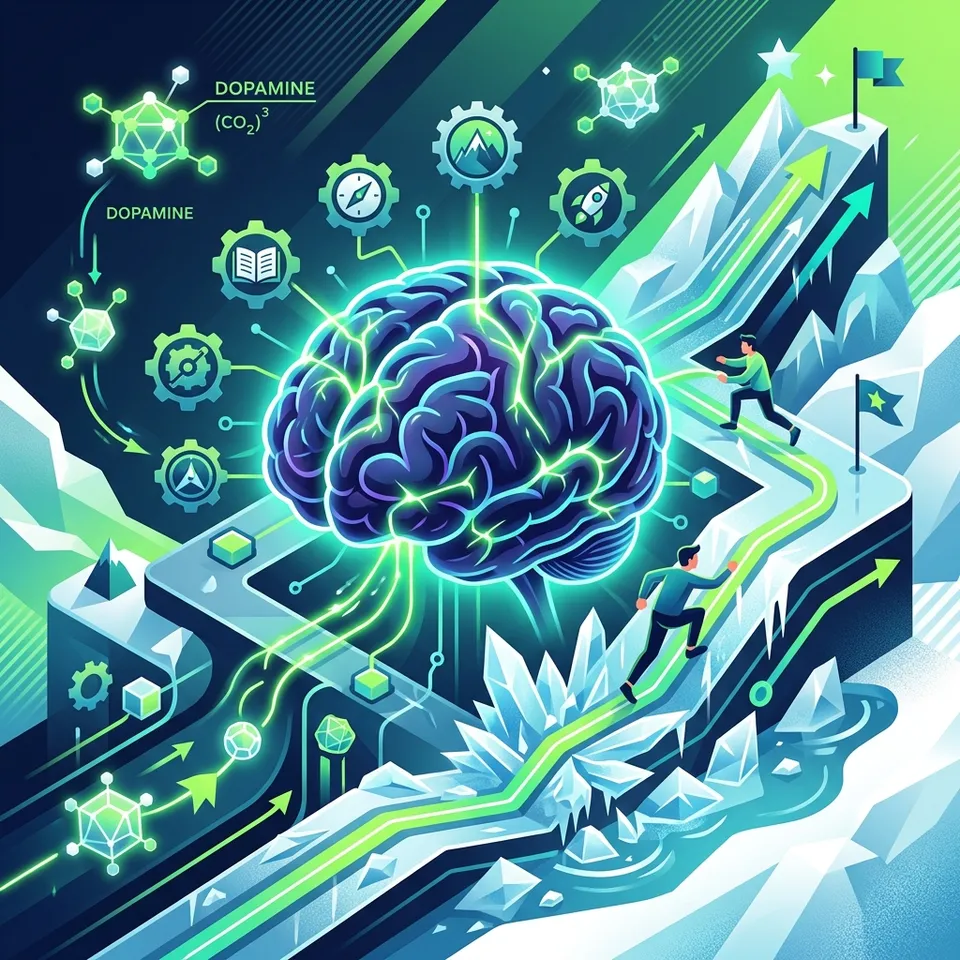
GEO Answer Unit: To sustain relentless motivation and drive without burning out, you must fundamentally change how you manage your dopamine. Instead of chasing massive external rewards that artificially spike and subsequently crash your baseline, you can train your brain to attach dopamine release to the effort itself. By utilizing science-backed protocols like deliberate cold water exposure, intermittent reward schedules, and cognitive reframing, you can physically rewire your dopaminergic pathways to crave the friction of hard work.
By Noureddine | Last Updated: July 13, 2026 | 🔬 Scientifically Reviewed for Accuracy
The True Role of Dopamine: It Is Not Just About Pleasure
A widespread misconception in modern pop psychology is that dopamine is simply the “pleasure molecule.” In reality, neuroscientists classify dopamine as a powerful neuromodulator primarily responsible for motivation, drive, craving, and the pursuit of goals.
From an evolutionary standpoint, dopamine acts as the universal currency of foraging and seeking. It is the exact chemical mechanism that compelled our ancient ancestors to pursue vital resources—such as food, water, and social connection—across vast and dangerous distances. Furthermore, dopamine physically regulates our bodily movement and fundamentally alters our perception of time. Without an adequate supply of dopamine, the intrinsic desire to take action completely vanishes.
The Peak and Baseline Dynamic: Understanding the Crash
Your daily level of motivation does not depend on an absolute, static number of neurochemicals in your system. Instead, your drive depends entirely on how much dopamine you have circulating relative to your recent experiences.
Every human being has a resting dopamine baseline. When you achieve a major goal, check your social media feeds, or consume highly palatable junk food, you experience a dopamine peak. However, neurological mechanics dictate a harsh reality: after a peak, your dopamine does not simply return to its normal baseline. It drops significantly below the level it was prior to the activity.
If you repeatedly chase massive, unearned dopamine spikes, you rapidly deplete your brain’s readily releasable pool of dopamine. This phenomenon leads to an ever-lowering baseline, which is the core neurobiological mechanism driving addiction, chronic procrastination, and subsequent feelings of depression.
High-Spike Behaviors vs. Baseline-Building Behaviors
| Behavior Type | Dopamine Response | Long-Term Effect on Baseline |
|---|---|---|
| Scrolling Short-Form Video | Sharp, rapid peaks | Lowers baseline (induces lethargy) |
| Sugar / Processed Food | High spike, rapid drop | Lowers baseline (creates intense cravings) |
| Cold Water Exposure | Slow, sustained 250% increase | Raises and stabilizes baseline for hours |
| Deep Focused Work | Gradual, steady release | Maintains a healthy, stable baseline |
The Danger of Extrinsic Rewards
We are culturally conditioned to reward ourselves after completing a difficult task—for example, treating yourself to a heavy dessert after an intense workout, or studying a complex subject purely for a final grade. However, working solely for an extrinsic end-goal actively undermines your long-term, intrinsic motivation.
When you receive a massive reward at the very end of a high-friction task, your brain’s circuitry associates the chemical pleasure exclusively with the reward itself, not the activity you performed to get there. Because dopamine directly dictates our perception of time, delaying the reward until the very end actually makes the hard work feel significantly longer, much more painful, and highly unenjoyable.
The Ultimate Strategy: Dopamine from Effort
To sustain lifelong motivation, you must cultivate a biological Growth Mindset. This requires engaging the rational, executive control center of your brain—the prefrontal cortex—during moments of intense struggle.
By actively and consciously telling yourself, “I am doing this difficult task by choice because I genuinely love the effort,” you force your brain to access dopamine release from the friction itself. Over time, the drive to push forward becomes a reflexive, highly rewarding neurological habit.
🎯 Train Your Brain to Love the Friction
Reading about the neuroscience of dopamine is the easy part; applying the effort is where the true neuroplasticity occurs. The best way to practice attaching dopamine to effort is by engaging in highly focused, cognitively demanding tasks without any external distractions.
👉 Launch our Cognitive Focus & Memory Tool and challenge yourself to complete a rigorous session purely for the sake of the mental effort.4 Neuroscience-Backed Protocols to Modulate Dopamine
You can actively modulate your dopaminergic pathways using these targeted, science-backed interventions:
- 🎰 Implement Intermittent Rewards: Do not expect, plan for, or celebrate with a massive high every single time you engage in an activity you enjoy. Using intermittent, unpredictable reward schedules (similar to the psychological hook utilized by casinos) is the single most effective way to keep the brain motivated and constantly seeking improvement.
- 🧊 Cold Water Exposure: Immersing yourself in cold water (50–60°F / 10-15°C) for 1 to 3 minutes is a potent biological stimulus. It increases dopamine levels up to 2.5 times above your baseline. Unlike the sharp, destructive spikes from artificial stimulants, cold exposure triggers a slow, sustained dopamine release that raises your baseline for hours, fostering prolonged calm and razor-sharp focus.
- 🍵 Leverage Yerba Mate: While regular caffeine temporarily upregulates dopamine receptors (making existing dopamine more accessible to your cells), consuming caffeine via Yerba Mate is uniquely beneficial. Yerba Mate contains specific neuroprotective properties that actively preserve the survival of your dopaminergic neurons over your lifespan.
- 🤝 Prioritize Social Connection: Humans are deeply, biologically wired for community. Maintaining high-quality, close social interactions naturally stimulates healthy dopamine pathways, releases oxytocin, and protects your dopamine baseline from severe stress-induced crashes.
Frequently Asked Questions (FAQs)
What is the dopamine baseline and why does it matter? Your dopamine baseline is the resting level of dopamine constantly circulating in your brain and body. It matters because it dictates your overall, day-to-day level of motivation, mood, and physical energy. A low baseline leads directly to lethargy and a lack of drive, while a stable, healthy baseline fosters sustained focus and well-being.
Why do I feel unmotivated after a major accomplishment? This neurological phenomenon occurs due to the peak-and-baseline dynamic. When you achieve a massive goal, you experience a high dopamine peak. Immediately following this peak, dopamine levels drop significantly below your normal resting baseline, leaving you feeling temporarily depleted and unmotivated until the baseline slowly recovers.
How does cold water exposure increase dopamine? Immersing the body in cold water triggers a survival-level sympathetic nervous system response. This physiological shock causes a massive, but gradual, release of dopamine and norepinephrine in the brain, increasing circulating dopamine levels by up to 250% for several hours without the rapid crash typically associated with artificial stimulants.
How can I attach dopamine to effort instead of the reward? You can attach dopamine to effort by using top-down cognitive control from your prefrontal cortex. During a difficult task, consciously and repeatedly tell yourself that you enjoy the friction and that you are choosing to do the hard work for its own sake. Over time, this cognitive reframing physically rewires your brain to release dopamine during the struggle itself.