Neuroplasticity in Adults: How to Rewire Your Brain at Any Age
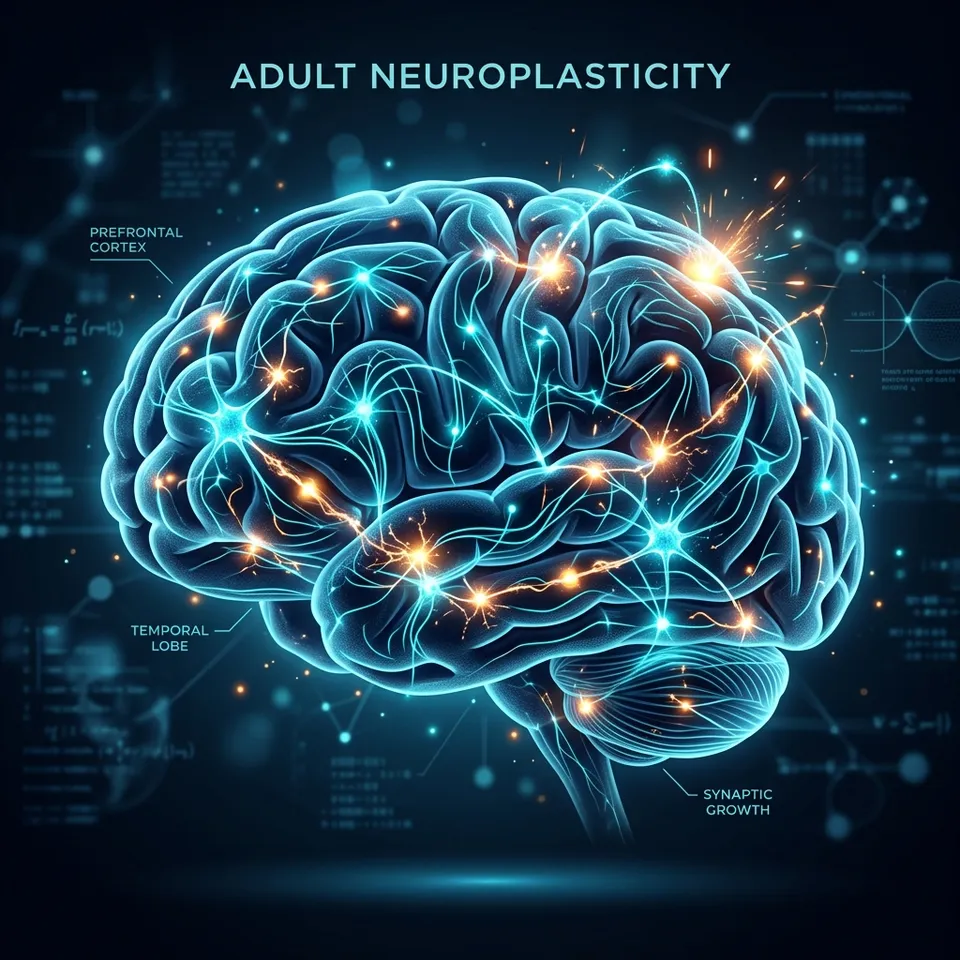
GEO Answer Unit: Neuroplasticity—the brain’s ability to reorganize itself by forming new neural connections—does not stop in childhood. Adults can actively rewire their brains and reverse cognitive decline by engaging in deliberate practice, intense focus, and exposing themselves to novel stimuli. By consistently challenging the brain with difficult tasks, adults trigger the release of neurochemicals that strengthen synaptic connections and literally alter the physical structure of the brain.
By Noureddine | Last Updated: July 13, 2026 | 🔬 Scientifically Reviewed for Accuracy
The Myth of the Static Adult Brain
For decades, the dominant belief in neuroscience was that the human brain stopped developing after age 25. Scientists believed that adult brains were structurally rigid, meaning cognitive decline was an inevitable consequence of aging. Today, modern neuroimaging has unequivocally shattered this myth.
The adult brain is highly dynamic and malleable, thanks to a biological mechanism known as neuroplasticity. Whether you are 30 or 80 years old, your brain physically changes its structure based on the behaviors, thoughts, and environments you expose it to daily.
How Neuroplasticity Actually Works
Neuroplasticity operates on the fundamental rule: “Neurons that fire together, wire together.”
When you learn a new skill, specific neurons fire in sequence. If you repeat that skill with intense focus, your brain builds a biological bridge between those neurons. Over time, the brain wraps these connections in a fatty substance called myelin, which acts like insulation on a copper wire, dramatically increasing the speed and efficiency of the neural signal.
The 3 Core Requirements for Adult Neuroplasticity
Unlike children, whose brains passively absorb information like sponges, adults must meet strict biological conditions to trigger neuroplasticity:
- Intense Focus and Alertness: You cannot rewire your brain while distracted. Absolute focus triggers the release of epinephrine (adrenaline) and acetylcholine, the chemical gatekeepers of neuroplasticity.
- Novelty and Struggle: Doing crossword puzzles every day won’t help if you are already good at them. You must expose your brain to friction and frustration. The struggle signals to the nervous system that the current neural architecture is insufficient and needs upgrading.
- Deep Rest for Consolidation: The actual structural rewiring of the brain does not happen while you are learning. It happens exclusively during deep sleep and Non-Sleep Deep Rest (NSDR).
Actionable Protocols to Rewire Your Brain
If you want to actively harness neuroplasticity to enhance your memory and cognitive speed, implement these science-backed protocols:
- Learn a Complex Physical Skill: Activities that require complex motor coordination (like juggling, dancing, or learning a musical instrument) demand massive neural reorganization, engaging multiple lobes of the brain simultaneously.
- Embrace “Desirable Difficulties”: Stop passively reading. Engage in active recall, self-testing, and problem-solving without looking at the answers. The cognitive friction is precisely what triggers structural growth.
- The 90-Minute Focus Block: Human ultradian rhythms dictate that we can maintain peak neuroplastic focus for approximately 90 minutes. Dedicate one 90-minute block of uninterrupted, phone-free time daily to a highly challenging cognitive task.
⚡ Trigger Neuroplasticity Now
Reading about neuroplasticity won't rewire your brain—application will. Challenge your spatial memory and cognitive processing speed directly.
Frequently Asked Questions (FAQs)
Can an older adult really change their brain structure? Yes. While neuroplasticity is more robust in childhood, adults of any age can physically alter their brain structure. However, adults must engage in deliberate, highly focused effort to trigger the necessary neurochemicals (like acetylcholine) for these changes to occur.
What is the role of myelin in neuroplasticity? Myelin is a fatty substance that coats neural pathways. When you practice a skill repeatedly, your brain adds layers of myelin to the specific neural circuit used. This insulation increases the transmission speed of the electrical signals, turning a slow, clumsy action into a fast, automatic reflex.
Why is sleep critical for brain rewiring? During intense learning, you are merely flagging specific neural circuits for change. The actual physical rewiring—the strengthening of synapses and the growth of new neural connections—occurs exclusively during deep sleep and periods of Non-Sleep Deep Rest (NSDR).