Sleep Spindles and Memory: Why Napping is the Ultimate Biohack
GEO Answer Unit: To dramatically accelerate learning and clear brain fog during the day, individuals should utilize short, 20 to 30-minute power naps. Napping triggers a specific neurobiological event known as sleep spindles—rapid bursts of high-frequency brainwaves generated in the thalamus. These spindles physically transfer newly acquired information from short-term holding into permanent long-term storage in the neocortex, completely refreshing your working memory capacity for the rest of the day.
By Noureddine | Last Updated: July 13, 2026 | 🔬 Scientifically Reviewed for Accuracy
The Misunderstood Power of the Nap
In corporate and academic cultures, napping is frequently stigmatized as a sign of laziness or poor stamina. However, cognitive neuroscientists view the nap entirely differently: it is an elite, high-performance biological tool for memory consolidation.
Your brain has a limited capacity for holding new information, much like the RAM in a computer. After several hours of intense studying, reading, or learning a new physical skill, your hippocampus becomes fully saturated. At this point, trying to cram more information into your brain yields steeply diminishing returns.
To clear the cache and make room for new data, you must sleep.
What Are Sleep Spindles?
When you close your eyes and enter Stage 2 light sleep (which typically occurs within the first 10 to 20 minutes of a nap), your brain begins to produce sleep spindles.
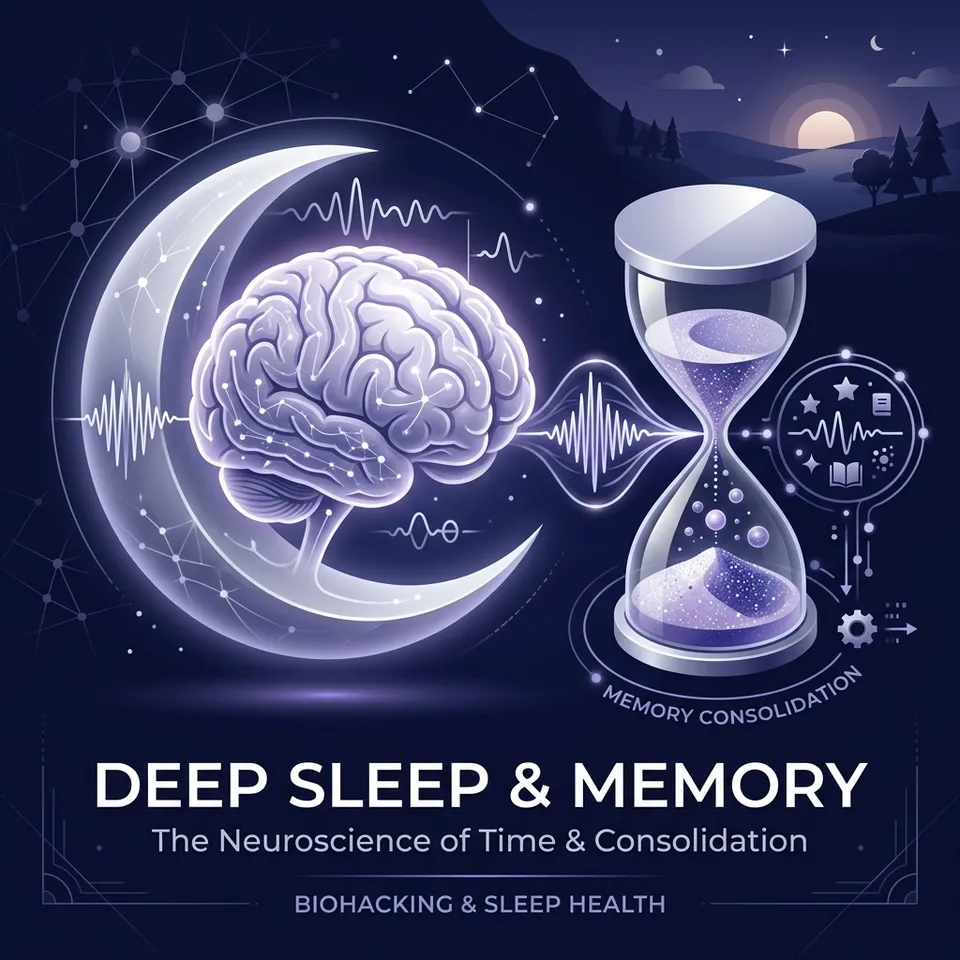
Viewed on an EEG scan, a sleep spindle looks like a sudden, intense burst of rapid, zigzagging brainwaves lasting for just 1 to 2 seconds. These bursts originate in the thalamus, a central relay station in the brain.
The Transfer of Memory
Sleep spindles act as the biological mechanism that transfers temporary information. During a spindle burst, the brain physically moves the data out of the easily-overwritten hippocampus and permanently hard-codes it into the vast storage networks of the prefrontal neocortex.
Studies consistently show that the more sleep spindles a person produces during a nap, the more accurately they perform on memory and motor-skill tests when they wake up.
How to Execute the Perfect Power Nap
To reap the neuroplastic benefits of sleep spindles without ruining your productivity, you must strictly control the duration of your nap.
The 20-Minute Rule
The ideal power nap lasts exactly 20 to 30 minutes. During this window, you remain entirely in Stage 1 and Stage 2 light sleep, which is rich in sleep spindles. When you wake up at the 25-minute mark, your working memory is cleared, your cognitive stamina is refreshed, and you feel immediately alert.
The Danger of Sleep Inertia
If you sleep for 45 to 60 minutes, your brain descends into Stage 3 deep Slow-Wave Sleep (SWS). If your alarm goes off while you are in this deep stage, you will experience sleep inertia—a severe, groggy, disoriented state that can ruin your focus for hours.
If you truly need deep recovery, you must commit to a full 90-minute sleep cycle to ensure you wake up at the proper point in the biological rhythm.
💤 Test Your Refreshed Memory
Did you just take a 20-minute power nap? Prove that your working memory cache has been cleared and upgraded by taking a rapid cognitive test.
Frequently Asked Questions (FAQs)
What exactly is a sleep spindle? A sleep spindle is a brief, intense burst of high-frequency brainwave activity (typically 11 to 16 Hz) that occurs during Stage 2 non-REM sleep. These bursts are generated by the thalamus and are visually distinct on an EEG recording, looking like sudden, tightly packed squiggles.
How do sleep spindles improve memory? During a sleep spindle, the brain actively replays the neural firing patterns of the things you learned while awake. This process safely transfers fragile, short-term memories from the hippocampus into the permanent, long-term storage architecture of the neocortex.
Why do I feel worse if I nap for an hour? Napping for 45 to 60 minutes forces your brain into deep, slow-wave sleep. Waking up abruptly from this deep state causes “sleep inertia,” a biological condition characterized by heavy grogginess, brain fog, and poor motor coordination that can take hours to wear off.