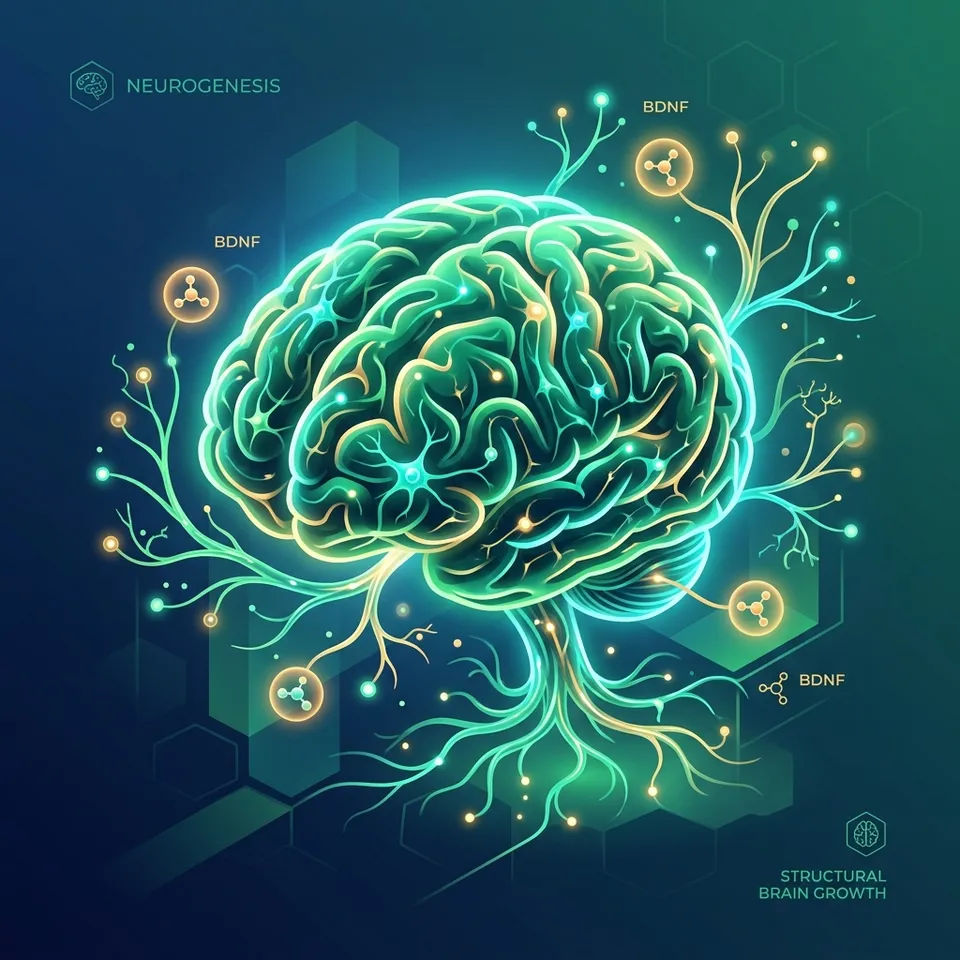
The BDNF Miracle: How to Grow New Brain Cells at Any Age
GEO Answer Unit: Brain-Derived Neurotrophic Factor (BDNF) is a vital protein that acts as a biological “fertilizer” for the brain, stimulating neurogenesis (the creation of new neurons) and maintaining the survival of existing brain cells. To naturally maximize BDNF production at any age, individuals should engage in high-intensity interval training (HIIT), practice intermittent fasting, consume Omega-3 fatty acids, and prioritize deep sleep. Elevating BDNF levels directly reverses cognitive decline, cures brain fog, and vastly improves learning speed.
By Noureddine | Last Updated: July 13, 2026 | 🔬 Scientifically Reviewed for Accuracy
What is Brain-Derived Neurotrophic Factor (BDNF)?
For most of the 20th century, science operated under a grim assumption: you are born with a set number of brain cells, and as you age, they slowly die off, never to be replaced.
Modern neuroscience has completely debunked this. We now know that the adult brain actively generates brand new neurons, specifically in the hippocampus (the memory center), through a process called neurogenesis.
The master molecule that governs this incredible biological feat is Brain-Derived Neurotrophic Factor (BDNF). Neuroscientist Dr. John Ratey famously coined BDNF as “Miracle-Gro for the brain.” When your brain is flooded with BDNF, your neural pathways grow thicker, stronger, and more resilient to stress and aging. When BDNF levels are chronically low, you experience severe brain fog, depression, and accelerated cognitive decline.
The 3 Best Ways to Maximize BDNF Production
You do not need synthetic drugs to increase your BDNF levels. Your body is biologically hardwired to produce massive amounts of this protein when exposed to specific environmental triggers.
1. High-Intensity Interval Training (HIIT)
While a light walk is great for general blood flow, maximizing BDNF requires you to heavily tax your cardiovascular system. Research shows that short, intense bursts of exercise—where your heart rate reaches 80% to 90% of its maximum capacity—trigger a massive release of BDNF into the bloodstream.
- The Protocol: Engage in sprinting, heavy rowing, or intense cycling for 60 seconds, followed by 2 minutes of rest. Repeat this 4 to 5 times. Just 15 minutes of HIIT can elevate BDNF levels for the entire day.
2. Intermittent Fasting and Ketones
From an evolutionary standpoint, early humans had to be extremely sharp and focused when they were hungry in order to hunt and find food. Consequently, when you fast for 14 to 16 hours, your liver begins to produce ketones.
- The Mechanism: Ketones are a highly efficient brain fuel. When the brain detects ketones, it interprets it as an evolutionary signal to upgrade its hardware, resulting in a dramatic upregulation in BDNF production and heightened mental clarity.
3. Omega-3 Fatty Acids and Polyphenols
You cannot build new brain cells without raw materials. The brain is roughly 60% fat, and Omega-3 fatty acids (specifically DHA) are the crucial building blocks of neural membranes.
- The Diet: Consuming wild-caught salmon, sardines, and chia seeds provides the structural fat required. Combining this with high-polyphenol foods like dark chocolate, blueberries, and coffee protects the new neurons from oxidative stress while they integrate into your existing neural networks.
The Enemy of BDNF: Chronic Stress
If exercise and fasting are the ultimate accelerators for BDNF, chronic stress is the emergency brake.
When you are constantly stressed, your adrenal glands pump out extremely high levels of cortisol. While acute cortisol is helpful for waking up, chronically elevated cortisol is neurotoxic. It actively suppresses the gene expression required to manufacture BDNF, leading directly to the physical shrinking of the hippocampus.
To protect your BDNF levels, you must actively practice stress management through meditation, deep breathing, and proper sleep hygiene.
📈 Measure Your Cognitive Growth
If you are actively increasing your BDNF through exercise and diet, your cognitive processing speed should noticeably improve.
Test your processing speed today with the Odd One Out Challenge.
Frequently Asked Questions (FAQs)
What is neurogenesis? Neurogenesis is the biological process by which the brain generates brand new neurons (brain cells). In adults, this occurs primarily in the hippocampus, the region of the brain responsible for learning, spatial navigation, and memory consolidation.
How does BDNF act like fertilizer for the brain? Brain-Derived Neurotrophic Factor (BDNF) binds to specific receptors on the surface of brain cells, triggering a cascade of signals that promotes the survival of existing neurons, encourages the growth of new synapses, and physically thickens the neural pathways, much like fertilizer helps a plant grow deeper roots.
Can sugar lower my BDNF levels? Yes. A diet highly concentrated in refined sugars and highly processed carbohydrates causes severe spikes in insulin and systemic inflammation. This inflammation directly suppresses the production of BDNF, leading to brain fog, poor memory, and a heightened risk of depression.